Séminaires

376 événement(s)

Yoel Forterre

From perception to action without nerves and muscles: lessons from plants

As sessile organisms, plants face a constantly changing environment with no means of escape. Thus, despite their lack of nerves and muscles, they have evolved unique mechanisms to perceive and respond to external...
Pierre Nassoy

Three-dimensional “cellular ballons” or cysts: microfluidic formation, growth, deformability, instabilities.

Organoids are lumen-containing multicellular structures that recapitulate key features of the organs. We will first present a microfluidic technology that allows to produce them at high throughput in individual...

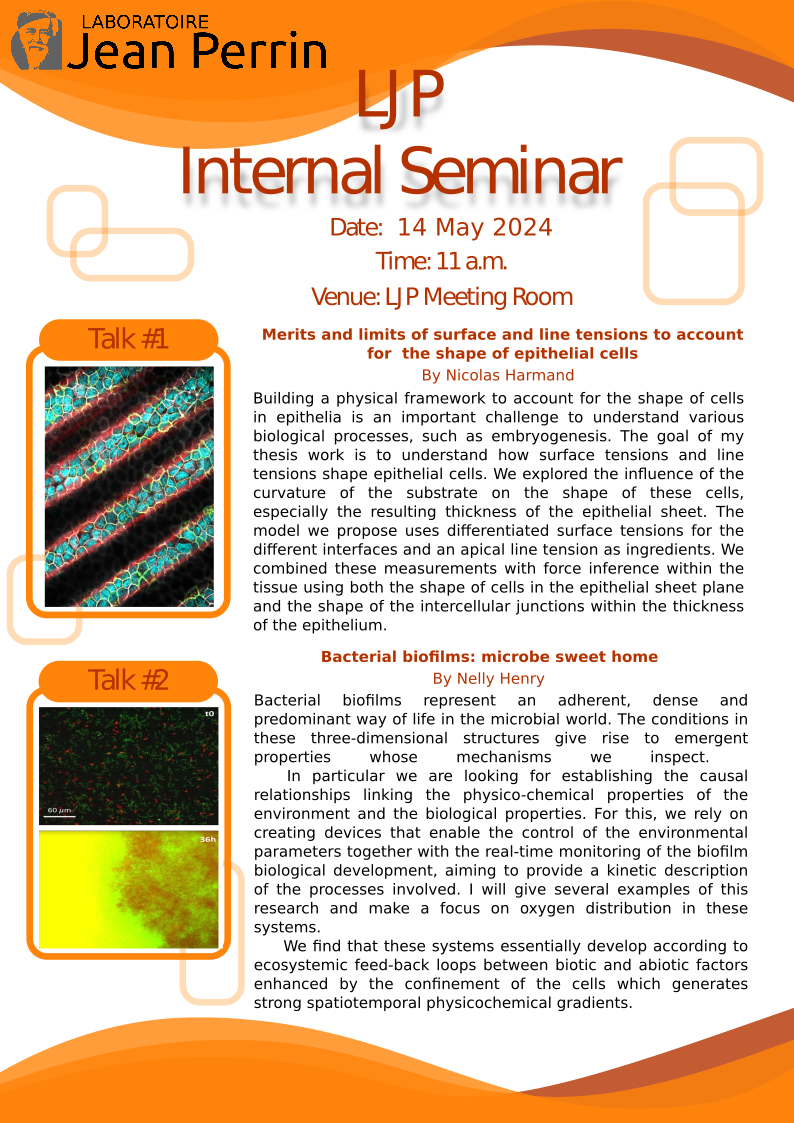
Nicolas Harmand and Nelly Henry

Séminaire interne.

See English version.

Raphaël Jeanneret

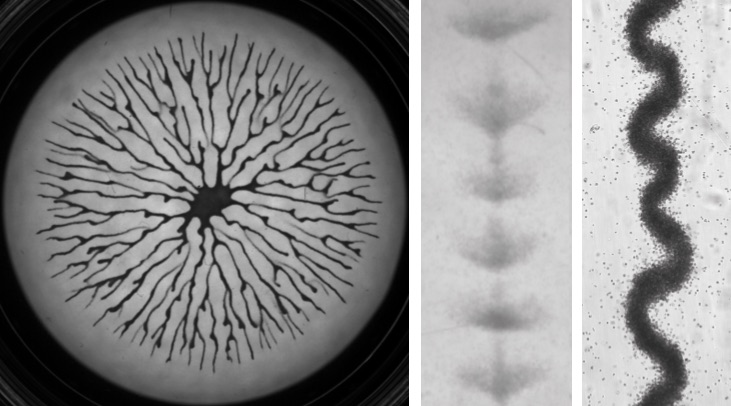
Shedding light on micro-algae: phototaxis-induced collective phenomena

Motile micro-algae modify their environment by absorbing light, consuming and releasing chemical compounds and generating flows. Flows, light, and chemicals in turn influence their motion. These complex interactions...

Daichi Hayakawa

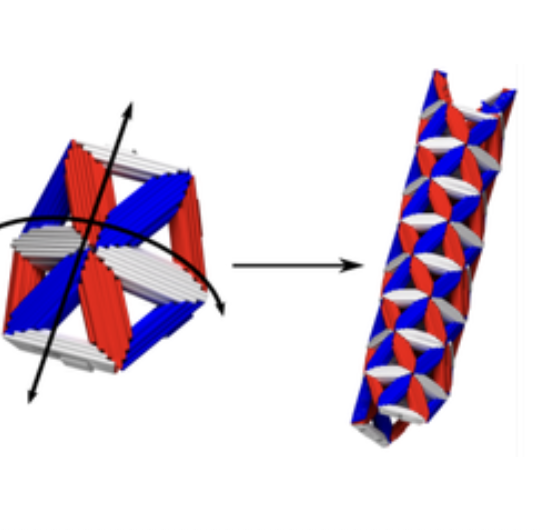
Programmable self-assembly of nanotubes using DNA origami colloids

Nature is replete with self-assembled materials that have one or more self-limited dimensions, including shells, tubules, and fibers. Despite significant advances in making nanometer- and micrometer-scale subunits,...

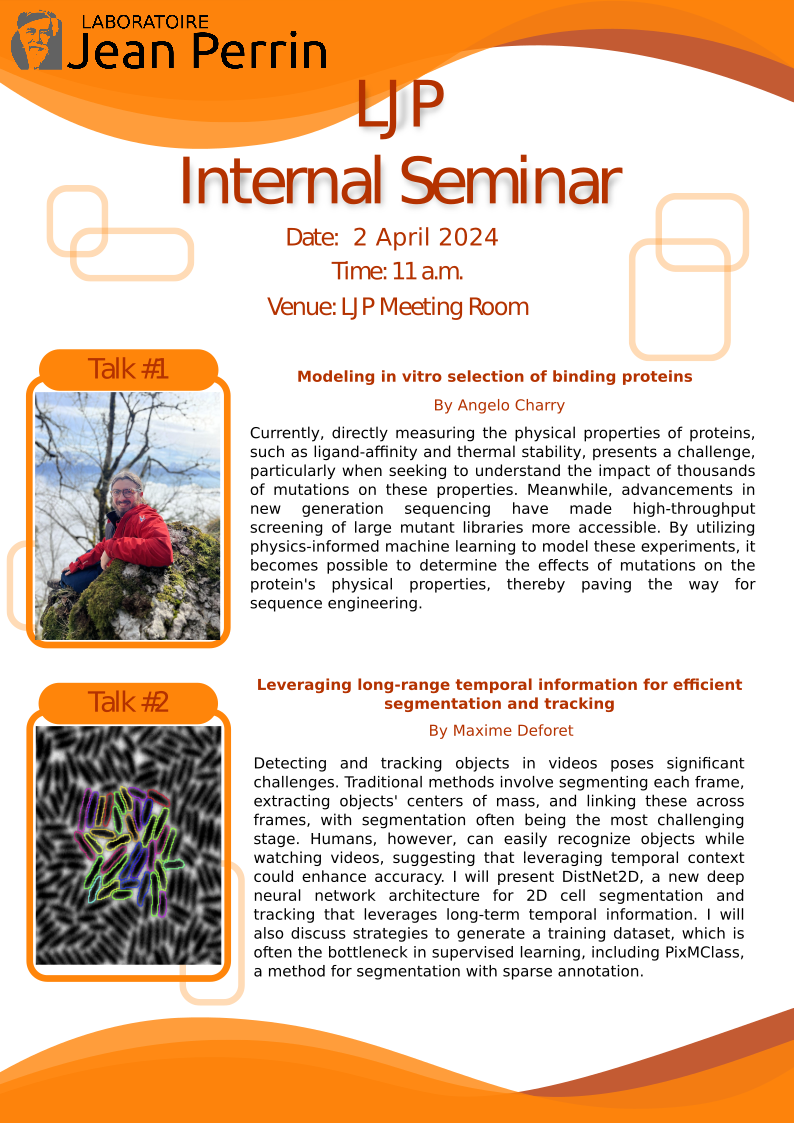
Angelo Charry and Maxime Deforet

Séminaire interne.

Séminaire interne. Les résumés se trouvent sur la version anglaise de la page.

Paolo Pierobon (Institut Cochin

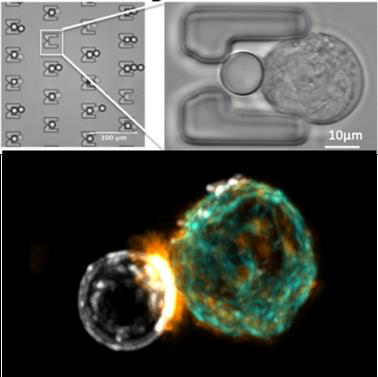
Mechanics and polarity in B cells

B cells serve as the primary producers of antibodies within the immune system. To elicit an effective immune response, they must recognize and internalize antigens through a specialized signaling platform known as...

Matthias Merkel (CPT

Oriented flows in biological tissues

I will talk about two project involving oriented tissue flows. 1) Most animals display one or more body axes (e.g. head-to-tail, left-right, ventral-dorsal), which usually emerge during early embryogenesis. In our...

Nicolas Bredèche (ISIR

Exploring Adaptive Collective Systems with Swarms of Learning Robots

I will give a brief overview of the research we are conducting on using robot swarms to study adaptive collective systems in the physical world. I will focus on (1) robot swarm to study physical interactions between...