Séminaires

376 événement(s)

Thijs van der Plas

Machine learning for monitoring biodiversity at scale

Nature conservation faces a growing paradox: while unprecedented volumes of biodiversity data are being collected, effective conservation action is increasingly constrained by the lack of detailed, large-scale...


AI mini-symposium at LJP

AI mini-symposium at LJP

Program here

Sophie Marbach

The Countoscope: Quantifying Dynamics by Counting Particles in Boxes

Quantifying the dynamics of particle suspensions is a widespread interest in soft matter. For instance, probing the motion of cells or larger organisms can help us understand biological behavior. When multiple...

Alexis Dubreuil

Beyond Hopfield networks for the modeling of neural computations

How does the collective activity of neurons leads to the emergence of behavior ? Attractor neural networks, such as the Hopfield model, have been proposed to underlie various computations involved in behaviors such...

Marc Besse

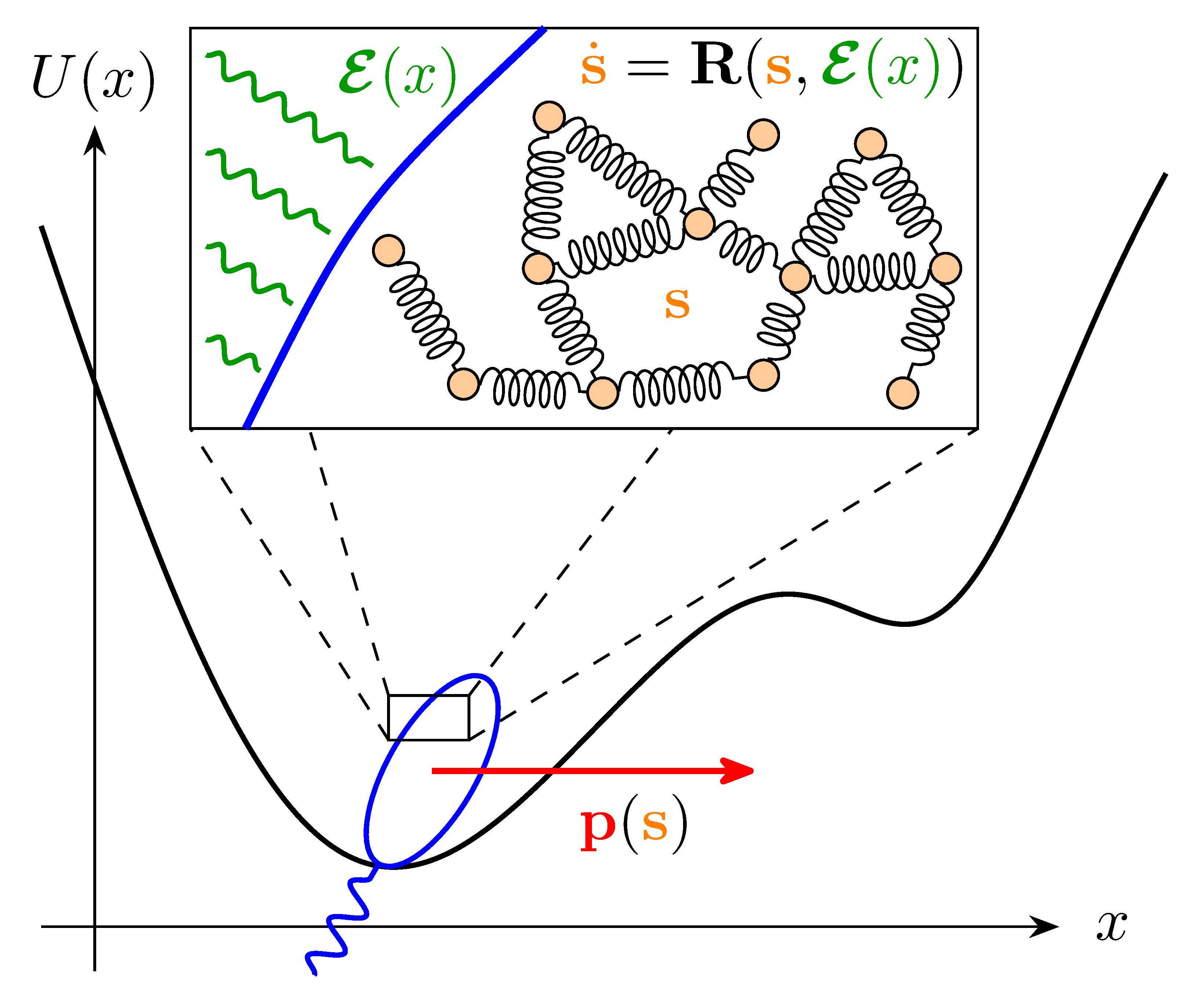
Memory and environment sensing in active systems

Active systems, such as living cells, are traditionally modelled via self-propelled particles driven by internal forces. It is however often assumed that these internal forces do not depend on the environment which...

Riccardo Ravasio

Evolution of error correction through a need for speed

Kinetic proofreading is an error-correcting mechanism by which biology expends energy to avoid mistakes during processes like replication and translation. Proofreading is typically assumed to evolve due to a...

Pascal Silberzan

3D cell mounds at topological defects

3D tissues that develop from a monolayer can take different forms: from folded monolayers -tubes or spheres - to bulk tridimensional tissues such as muscles, stratified epithelia, or epithelial tumors.  In vivo,...