Séminaires

376 événement(s)

Raphael Voituriez (LJP /UPMC)

Mean first-passage times of non-Markovian random walkers in confinement

The first-passage time is a key quantity for evaluating the kinetics of various processes, and in particular chemical reactions involving "small" numbers of particles. A striking example is given by gene...
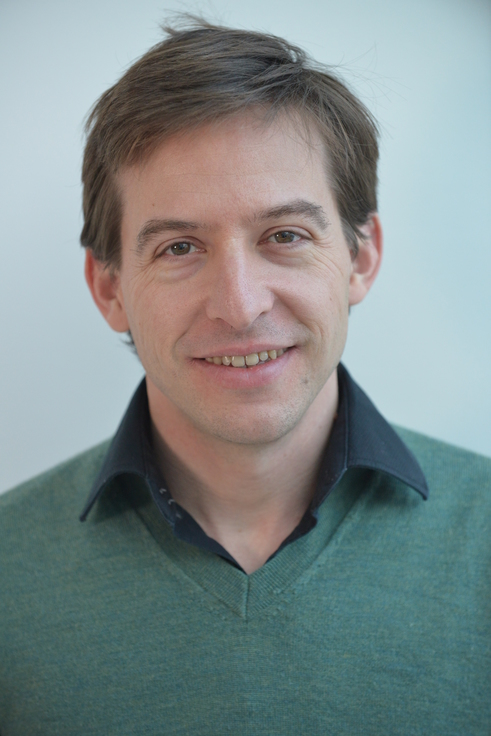

Romain Brette

Neural synchrony in early sensory processing

What is neural synchrony good for? First, I will show that, whether synchrony has a functional role or not, neurons are extremely sensitive to coincidences among its inputs. To understand the functional significance...

-

AG du labo

-

Laure Claverie

Soutenance de thèse

Les rongeurs utilisent leurs vibrisses pour sonder tactilement leur environnement. Tout contact induit des contraintes mécaniques lentes quasi-statiques et rapides vibratoires, qui se propagent jusqu’en base de...

Adrian Zambrano

Engineering chemical organization using DNA-based reaction networks

We are inspired by the morphogenesis processes that are involved in the emergence of shape and structure in living systems. We aim to engineer chemical and material organization using the two most debated mechanisms...

Stéphane Dieudonné (IBENS

Cortex à la demande: circuit disinhibiteur du cortex cérébelleux.

The cerebellum plays an essential role in coordinating sensori-motor integration and motor execution. In the classical view of the cerebellum, sensory-motor inputs carried by the mossy fibers are forwarded to the...

Ludovic Jullien (ENS chimie et UPMC)

Driving energy flow throughout chemical networks

Envisioned as organized matter, any living system necessarily exists in a dissipative non-equilibrium state. Otherwise it would reduce to immutably stable combinatorial mixtures of chemical compounds. Indeed,...